Ernesto Diaz-Infante was one of my earliest encounters on the Bay Area music scene. I remember receiving his music at KZSU — contemplative solo piano albums like Itz’at initially, then guitar explorations like Wires and Wooden Boxes. (Follow those links to find them on Bandcamp.) He’s worked in groups often enough, but in my mind, his name ties to mostly solo work, especially long-form guitar explorations, sometimes soothing, sometimes rumbling.
Lately he’s performed in a duo with his son, Ezra Sturm. I’ve gotten to enjoy their live performances twice this year, and they’ve collaborated on an album, The Escape, featuring Sturm on electric guitar and Diaz-Infante mostly on acoustic.
A standard mode of conversation for them is for Diaz-Infante to create a percussive field — rapid picking or a hard-clipped strumming — against slower, fuzzed-out blasts from Sturm. They work within a language of sour tones, both electric and acoustic. Their improvisations often build a tangible rhythm, and they are not above riding the occasional groove. “Tears Before Chaos” opens with an electric guitar blare like a slow alarm, backing fodder for Diaz-Infante’s acoustic rustlings that spike into hyperkinetic mode, but it ends with Diaz-Infante strumming a cycle of chords with Sturm’s fuzzed-out electric joining in.
The closing track, “When the Clock Hits Midnight,” is another beast entirely, based on steady synth arpeggios against an atonal electric-guitar chime. Marjorie Sturm’s flute, subtly nestled against the synth sounds, alternates between sublime and ominous. The piece is dark on the surface, but by the end, it’s got a spring in its step.
Ernesto Diaz-Infante and Ezra Sturm, during their Day of Noise sound check
In March, I got to see Sturm and Diaz-Infante play a long-form improvisation at the Luggage Store Gallery, both on electric guitars. They opened a strong program that also included Pet the Tiger and the quartet of Darren Johnston (trumpet), Christina Braun (movement), Ivy Woods (double bass), and Rent Romus (sax).
Before that, Diaz-Infante and Sturm appeared on KZSU’s Day of Noise 2024, again both on electric. They were in an especially exploratory mood, wandering into ethereal territory that showed they continue finding new ground, six months after having recorded The Escape. We streamed Day of Noise to the KZSUlive channel on YouTube, meaning you can experience that performance right now.
Diaz-Infante is having a prolific year. Amor Celestial and For Jim Ryan both feature pairs of long-form works, the latter album having been performed in honor of the late saxophonist Jim Ryan. I’m hoping to write more about Jim (and that tribute album) soon.
San Francisco Contemporary Music Players — RE:visitations SF Conservatory of Music Saturday, January 27, 2024
I have often wondered about avant-garde compositions and the limitations of time. Performances are rare for most of these pieces, and the work isn’t simple. Do performers struggle to find the time to do the work justice? Is the problem even worse for a large ensemble? For an orchestra?
Back in January, Eric Dudley (SFCMP Artistic Director) and Steve Horowitz (now an SFCMP director as well) gave a pre-concert talk confirming that the answers are Yes, and there’s no magic formula to get around it.
Frank Zappa’s The Perfect Stranger was the program headliner for the San Francisco Contemporary Music Players that night, in a program titled RE:visitations, and Dudley and Horowitz prefaced the concert by discussing Zappa’s ambitions and methods. Zappa’s bands — the large ensembles with the jazzy horns and heavy doses of improvising — rehearsed something like 10 hours a day and lived together for long periods of time. They worked on the music, and the rewards are evident in the performances.
As Dudley explained, Zappa famously admired the “20th-century” classical masters, beginning with Edgar Varèse, and, despite being a proud iconoclast, yearned to be accepted in their company. He eventually got his wish. The Perfect Stranger: Boulez Conducts Zappa (Angel/EMI, 1984) documented three “serious” Zappa pieces including the title track, alongside some early Synclavier constructions. And the final album released in his lifetime, The Yellow Shark (Barking Pumpkin, 1993), documented a live concert by Ensemble Modern.
Regarding Perfect Stranger, Zappa appreciated Boulez’s dedication but was disappointed that the orchestra didn’t have time to thoroughly work on the music. Dudley and Horowitz said they feel the same frustration: There’s so much great work out there and not enough time to devote to each piece.
My own frustration with time is a lot cushier: There’s more music available than I can absorb, and I don’t have time to study the “serious” pieces as deeply as I’d like. No, that’s not quite it: There was always more music out there than I could handle; it’s just that now, I’m more aware of it, and it’s all more accessible. That’s a happy place to be in, really. For performers trying to champion new music, though, the frustration must be tormenting.
As for the performance itself, The Perfect Stranger was a delight. I had not heard the piece before; it certainly sounds “classical,” slower and more serious than I’d expected, even after the dynamic opening with the doorbell chime (the story behind the song is hidden in there). Fewer moments of levity than you would expect from a prankster god, but it is also replete with Zappaesque licks, especially from the percussion.
Adding to the joy of a live performance is the ensemble’s physical layout, which Zappa’s score specifies: The group is divided symmetrically down the middle, with instruments paired on each side in mirror-image fashion. The two percussionists, whose role is vital and dramatic, were highly visible on the extreme ends of the stage, rather than hidden in the back. We got to see their arrays of instruments laid out on long tables, and watching them prepare for the next bit and wait for their cues helped make the piece absorbing. Down the middle are some of the unpaired instruments — notably harp (Meredith Clark). She got some showcase moments, but it was also easy to track the harp’s “comping” contributions. The visibility mattered.
Immediately before The Perfect Stranger was Boulez’s own Derive I, Dudley having enthusiastically paired the pieces for comparison and contrast. Shared elements included melodic phrases that hung in the air, drifting — but The Perfect Stranger felt more showy, as if laying out a proof that Zappa’s language could fit modern classical music’s idioms.
Derive packed plenty of punch itself, and the smaller ensemble of six made it a bit easier to track individual instruments. Tod Brody on flute started the piece off with dynamic energy, and violinist Hrabba Atladottir was a propulsive force.
I enjoyed the rest of the program too, including two new compositions and a piece by Louis Andriessen that played against short soundless films. It’s all listed at the SFCMP site, and hopefully I’ll find time someday to type up those notes.
(The Back Pages series is explained here, where you’ll also find links to the other installments.)
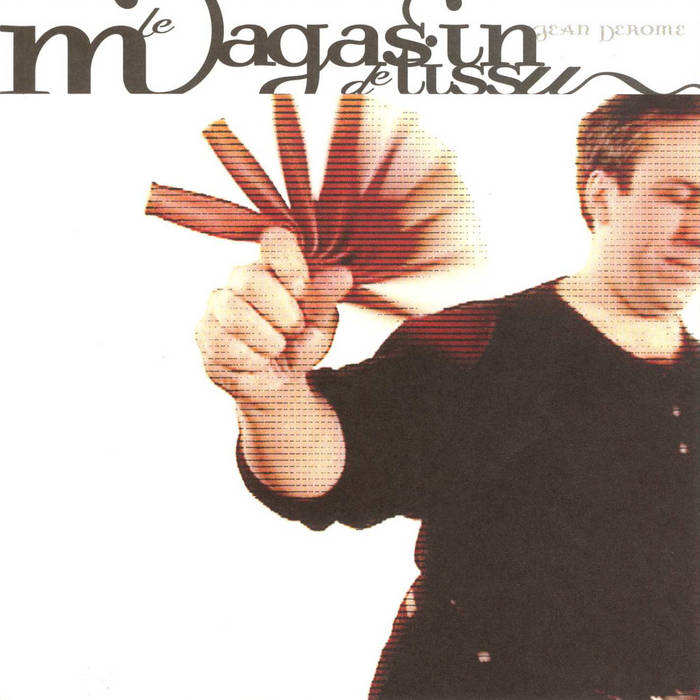
I’m long overdue to write about Jean Derome’s Le Magasin de Tissu (Ambiances Magnetiques, 2001). It’s one of the CDs that the French-Canadian label sent to KZSU back in the day, and I loved the concept so much that I bought a copy of my own, so that I could play them both on the air simultaneously.
It made sense to do that because of the cut-up, randomized nature of the album.
Le Magasin de Tissu (“The Fabric Shop”) is a collage of Derome’s solo improvisations, roughly 90-second snippets that he recorded onto three CDs of 23 tracks each. He used a battery of instruments: horns, flutes, percussion, noisemakers, one small keyboard, his voice. Each CD also included 14 tracks of silence.
The final recording consists of all three CDs played on shuffle simultaneously. The result is an unpredictable trio of sounds — and because of those silent tracks, you also get spontaneous spans of duo or solo playing.
I’ve long been fascinated by randomness and random (or pseudorandom) numbers, so this concept was catnip. Certainly, it harkens back to John Cage-ian ideas. A similar process was behind Tania Chen’s recording of Cage’s Electronic Music for Piano.
But Derome adds another dimension.
The CD booklet includes a MAP OF WHAT’S HAPPENING, a schematic telling you which tracks from which of the CDs are playing. You get to see the random duets and trios that emerge. Corresponding charts show the track listings of the three source CDs and an inventory of the instruments used, both in pictorial and text form. How cool is that? (Scroll through the gallery below to see.)
I know, I know — this all sounds like Homework: The Game (a D&D reference from Gravity Falls), but for me, it hits all the right nerves of geekdom. (See also Harold Budd and Andy Partridge.) On my first listen, I followed dutifully with the map, gleefully cross-referencing the instrument charts. At KZSU, I gave the CD multiple spins, and one time I indulged myself by playing two copies simultaneously, flickering each CD from one track to another, possibly creating unintended quartets, quintets, and sextets.
This album is the kind of thing that works once. The magic comes from having just one permutation codified on disc. Do it a dozen more times, and the beauty fades into scaffolding and plaster. The art of it, and the fun, come from the process more than the result. (I’ve noted similar feelings about albums by Kris Davis and Didier Petit and Alexandre Pierrepont.) Although the result is meaningful: As with improvisation in general, Le Magasin captures one moment in time while reminding us that every moment is unique.
There’s further backstory: The reason KZSU got this CD was because I’d encountered Derome and Joane Hétu, the Ambiances Magnetiques proprietors, during a 1999 trip to Paris. They performed at Les Instants Chavirés as the duo Nous Perçons Les Oreilles — appropriately shrill and piercing stuff, as I recall. (And findable on Bandcamp!) They’re from Quebec, and between my spotty French and their grasp of English, we established contact and started radio servicing.
That was an exciting period for me, when I was still learning about the global scene and making discoveries every month. And when Le Magasin arrived, well, that was one of the best rewards.
SF Tape Music Festival Victoria Theatre, San Francisco Sunday, January 7, 2024
Abstract music tells a story. There is a trajectory — maybe a gradual buildup, maybe the classic fast-slow-fast, maybe an epic novel of surges and fades. But reaping these rewards can take focus. Sure, I sometimes play sfSound Radio in the car, but much like a complex novel, listening to electronic music is most rewarding in an undistracting environment that lets you absorb.
Francis Dhomont, 1981. Source: Radio France, where you’ll find an hour-long Dhomont documentary (in French) broadcast early 2023
That’s what makes the San Francisco Tape Music Festival special, and it’s why it fills up the Victoria Theatre. This is a gathering place for people who want to celebrate this music and hear the pieces presented with dedication: high-end loudspeakers surrounding the audience, lights off (save for the glowing EXIT signs), and mixing-board curators tweaking the stereo pieces to take advantage of the speaker field. The atmosphere is communal — artists chatting, catching up on one another’s projects and lives, then going reverently silent during the program.
“Tape” music refers to an audio composition committed to fixed media, the term dating back to reel-to-reel tapes and the musique concrète work that began 75 years ago. Nowadays, is done digitally, but the practice and process of musique concrète still fascinates, and part of the fun is to learn the real-world sound sources that mutated to form these pieces.
Adam Stanović’s Into the Sea used the normally pleasant sounds of a crashing surf to create glimpses of gaping terror. As you can read in the concert program, Stanović had played ocean sounds to his mother in her final stages of cancer — a gesture of comfort, but one that he believes could not bring her peace. “I couldn’t listen without hearing terror, agony, and fear,” he writes.
Boyi Bai’s Echoes of National Parks drew from recordings at National Parks. I remember a lot of water involved, and the larger project, What Does Your National Park Sound Like?, bears that out. But there were also human-made sounds (a bell), wind, possibly some traffic. You can hear it on Soundcloud.
One of the “classic” pieces, Xenakis’ Concret PH from 1958, sounded glassy. I pictured solid glass rods spilling out onto a floor, bouncing a little. But no — Xenakis used the sound of burning charcoal, clipped into an irregular percussive flow.
Some pieces went amusingly “meta” by using other pieces as sources. Brian Reinbolt’s Bischoff Surface Variations was built from segments of John Bischoff’s electronic music album surface variations, used with permission. Francis Dhomont, who had died weeks before this show, had submitted a new piece to the festival: Somme Toute, an octophonic construction alluding to many of his past works — a joyful crazy-quilt of sounds.
And Matt Ingall’s new revision of Scherzo. Allegro molto included chopped-up recordings of his own radio interview about the Tape Festival and the original 2002 version of Scherzo. Allegro molto, making it possibly the only Tape Festival “song” ever to include the title. That piece began with segments of intensely fast cuts with lots of musical sources — Ingalls’ own clarinet, out-jazz, cartoony sounds.
This year, sfSound posted extensive online notes for each of the four programs that it presented, a rich resource for learning about the pieces and the composers. Here is the link to the Sunday show’s program, and below is the Sunday agenda, with links to artists’ own pages:
International trips are rare for me, but I took two in 2023, both with family. Separately, work sent me to New York, my first trip in a full year. The travel was fun but exhausting — flying grinds me down, even when everything goes smoothly — and I’m kind of hoping we stay closer to home in 2024.
That said, it’s hard to complain about this past year.
June 2023: Amsterdam
We skirted through Brussels, as I noted before, but the real destination was Amsterdam, for a week of museums and canal-walking. I also convinced my family to visit the Bimhuis and spend an evening at Alto Cafe.
The Bimhuis is a treasure, at least to these overseas eyes — a casual, comfortable amphitheater built especially for jazz. Even the outside looks cool, a dramatic block suspended over the waterfront in a building shared with Muziekgebouw aan’t IJ. Founded DIY-style in 1974 by three pillars of Dutch jazz (Hans Dulfer, Willem Breuker, and Misha Mengelberg), the venue is polished and contemporary — but this is Europe, so improv and experimental acts make the calendar too, with nobody blinking an eye.
The Tuesday night “Rough Diamonds” series, devoted to up-and-comers, seemed like the night to target: a lower cover charge and a more casual setting, making it less conspicuous to walk out early. Low pressure.
As advertised, we were treated to two groups of young, energetic musicians, playing that European flavor of contemporary jazz — pleasant enough for my wife and daughter, out-there enough to keep me happy.
M.A.S.T. Quartet, led by sax and guitar, played airy, wide-open pieces, with long spaces for adventurous soloing. Personnel: Miguel Valente (alto sax), Adrian Bifano (guitar), Samuel Kiel (double bass), Teunis Loot (drums).
The NJTA Project (pictured), led by bassist Anja Gottberg, featured a sax-and-trumpet front line, adding a guitarist at times. This set featured quirky compositions, lively and creative.
Jazz Cafe Alto, I had never heard of before and found while researching how to fill our week in Amsterdam. Travel-site reviews complain about the crowd, the stage visibility, and the pushy staff — but these are just hallmarks of a normal jazz club. (The pushy staff was probably a reaction to pushy tourists.) The venue, like many, is a long rectangle, stage at one end, and the space eventually fills up with people standing — hence, tight visibility. You have to get in early. We arrived at 9:00, too late for any of the few tables but just in time to claim the last open barstools. The vibe was easy — lots of small groups enjoying drinks, and lots of young couples. By 10:30, the room was filled, all the aisleways packed, and we ceded our barstools to a thankful SRO couple.
The bandleader that night was tenor saxophonist Hans Dulfer, leading a piano-bass-drums quartet. I knew him vaguely by reputation and, yes, for being Candy Dulfer’s father; only later would I discover his role in co-founding the Bimhuis. It was a spirited, crowd-pleasing show, flipping between ’50s-style straightahead jazz and more complex numbers that started mellow (stacks of late-’60s McCoy Tyner chords) and culminated in fireworks and skronk. A couple of different sax compatriots shared the stage at different times, one being Boris van der Lek, Dulfer’s partner in the Tough Tenors band. The Cafe was hopping that night.
August 2023: Phoenix
Here’s a cry for help. Now that our son is in college, we’re visiting downtown Phoenix at least twice a year. We’ve found good food, but the culture leaves me hungry. The run-down parts of central Phoenix are disheartening, and the shinier parts smack of business-first bleach, where “the arts” means a begrudgingly tax-funded symphony that plays Disney classics and Christmas concerts. There’s got to be more, somewhere. Even if I never have the time to experience it, I would be comforted to learn that there’s life in the desert. Any suggestions are welcome.
September 2023: New York.
Work trips are scarce for me these days, and the few that I get are not the baseball-and-record-store boondoggles they used to be. That’s not because of the economy; it’s because tech conferences have gravitated to Las Vegas.
So, when I was graced with a trip to New York last fall, I seized an extra day off and made the most of it. I don’t mean hectic museum-hopping. Having been there enough times, I know what I want out of that city: a late start, a placid morning in a coffee shop, a Downtown Music Gallery visit, and a show at night. As an unexpected bonus, I also explored Academy Records, a classical CD store with a very East Village clientele and a small but richly curated jazz/experimental section. I’d been steered there by a work colleague familiar with the downtown/Zorn scene, and the clerk at Downtown Music Gallery recommended it as well, unsolicited. One more cog in my New York routine.
My evening was a no-brainer: John Zorn’s New Masada Quartet was doing a residence at the Village Vanguard. I went in knowing nothing about the new Masada. It was news to me that they existed, let alone that they’d just released a second album. This new band is explosive, and Julian Lage, whose guitar is the only change in the Masada format (replacing Dave Douglas’ trumpet, no small shoes to fill), is a magician and just flat-out rocks hard. Zorn, for all his avant-gardeness, performs with audience awareness; he delivered free jazz energy and kept ratcheting it up, pressing poor Kenny Wolleson (drums) to play faster and faster and louder and louder. Wolleson can take it, of course, but it was fun to imagine him as a beleaguered cartoon bricklayer. Zorn’s torrent of verbal and visual cues — essentially conducting each number — drew us into the process and made the fun infectious. Zorn and Lage broke out laughing so many times. It was a lucky “right place, right time” circumstance for me, and taking my own advice from Jazz Cafe Alto, I showed up early for a good view.
October 2023: Japan
I am Japanese-American and yonsei; my grandparents were all born in the United States, and our family’s center of gravity is Los Angeles. But in the ’90s, my parents established contact with one family branch in Japan, and I’ve now visited those wonderful relatives three times. These trips don’t have much leeway for music, but this time, I squeezed in my second-ever visit to Disk Union. My parents encouraged me to stay “as long as you want,” which was sweet — but they don’t understand the danger of me in a record store, so I hurried it up. I beelined to the Free Jazz section, seeking known quantities like Satoko Fujii, Akira Sakata, and Otomo Yoshihide but also hoping to fortify myself with new names. It worked. I’ll write that up separately.
Because I was partway through the novel Lost Children Archive, it caught my eye when author Valeria Luiselli and her two collaborators came through Berkeley to present part of their sonic essay, Echoes From the Borderlands. It was a rare opportunity to combine my current reading with a listening experience. I couldn’t attend, but thankfully, I found a video of their February 2023 presentation of Echoes at Harvard.
In her novels, Luiselli toys with narrative form and casually mic-drops heady truths about life, love, politics, and parenthood. Now a Bronx resident, she has a cosmopolitan background, with a childhood that crossed South Korea and South Africa. She has taken particular interest in the cruelty playing out on the US southern border — she was born in Mexico — and a few years ago volunteered as a court translator, interviewing migrant children in New York. That emotional experience fed a book-length essay (Tell Me How It Ends) and deeply informed the novel Lost Children Archive. The books had to be written in that order; she told the New York Times that the essay helped her work through her emotions, so that the novel could be seeded with “open questions” rather than caked with anger.
The central characters of Lost Children Archive are soundscape documentarists. Luiselli’s fiction draws copiously from her real life, so I should have guessed she was involved in a soundscape project herself.
Luiselli, Leo Heiblum, and Ricardo Giraldo have been constructing Echoes From the Borderlands since 2020. Their goal is to create a sonic essay 24 hours long — representing the driving time along the entire border, from San Diego to the Texas gulf coast — telling the multifaceted history of “violence against land and bodies in the US-Mexico borderlands.”
The recordings include humans, from tourists marveling and gloating at the border wall to interviews with border residents: miners, cactus farmers, cowboy re-enactment players. Voices of the present. The artistic heart of the piece, though, is the ambient sound: road, wind, insects — desert spaces where we can listen for voices of the past. It touches on a theme in Lost Children Archive: the emptiness that echoes after people vacate a space and their actions fade into history.
The Harvard presentation summarizes the work with about an hour’s worth of material, augmented by a live narrators — distinct characters who add context, not only about the trio’s own observations, but also the border region’s brutal history: forced sterilizations in California, nuclear tests in New Mexico. It’s a mix of live and recorded storytelling, a documentary presented theatrically. Put together, it all builds an arresting story.
As you hear them explain in the second half of the video above, the trio has completed recordings from San Diego through New Mexico, material that will form the first half of the 24-hour audio journey. The current plan is to include interviews as nodes of roughly 40 minutes, signposts along the route — but the trio are still mulling the final form of the completed project, with a lot of possibilities on the table. In terms of distributing the work, something modular seems likely, and a sound drive with the full 24 hours is a compelling idea. They’ve even considered creating a version without narration, leaving the pure sound to be the “essay.” The work will progress gradually, and the end is years away, but already, they’ve found they have something worth saying and sharing.
It’s called Veals & Geeks, and it is split among at least three storefronts clustered in the touristy Grand-Place neighborhood: a CD-focused store that looks like it was their original location; a nook with vinyl bins and some used CDs; and an outlet for audio gear. They don’t do online sales, steadfast in the belief that these stores can be community hubs for music lovers.
The Improv section, located in the first store, wasn’t large — maybe 20 or 30 items, huddled between Jazz and a special row just for Tzadik — but had clearly been curated by someone who knew what they were doing. Familiar names stood out, like Fred Lonberg-Holm and the sadly departed Peter Brötzmann. In a non-purist way, it included albums not purely improvised but appealing to the same listener base. I think that bin is where Dougie Bowne’s One Way Elevator lived, a disc that I’d heard of but never managed to find. (It’s a high-caliber trio: John Medeski, Fred Hopkins, and Bowne, doing Bowne’s compositions. A happy find.)
In hindsight, I wish I’d bought more. But it was early in our week-long trip to Europe, and I was worried about luggage space, and I was trying to budget myself. I decided to focus on names I was less familiar with (sorry, Fred and Peter). Back home, I spent lots of time with two albums in particular.
Delphine Dora, Bruno Duplant, Paulo Chagas — Onion Petals As Candle Light (Wild Silence, 2012).
This was too endearingly DIY to pass up, packaged in a square paper envelope with a swatch of glossy homemade-looking artwork taped to the front and a store-recommendation tag promising “trance improvisation.” Affixed to the back was a small label, the size of a fortune-cookie fortune, naming the artists and album. The CD face is blank white, no words, and the clerk apologized that he couldn’t guarantee it was the right one. I told him I was happy to take a chance. (It was indeed the correct disc, verifiable on Bandcamp.)
The aesthetic is gentle-rain quietude with a subtle edge. Delphine Dora‘s recordings elsewhere are patient mixes of piano (often prepared piano) with voice, field recordings, and loops. Here, she takes the same approach, leaving plenty of contemplative space while poking and stabbing confidently, often favoring melting-ice high registers. Chagas’ clarinet and flute outline the mood with languid lines. Duplant bows the bass delicately amid the fragile “To Cy Twombly” and adds sparse, confident plucking throughout “Mechanics of Dreams.”
Dora has an extensive catalogue of work on Bandcamp.
Move — Hyvinkää (Unisono, 2016)
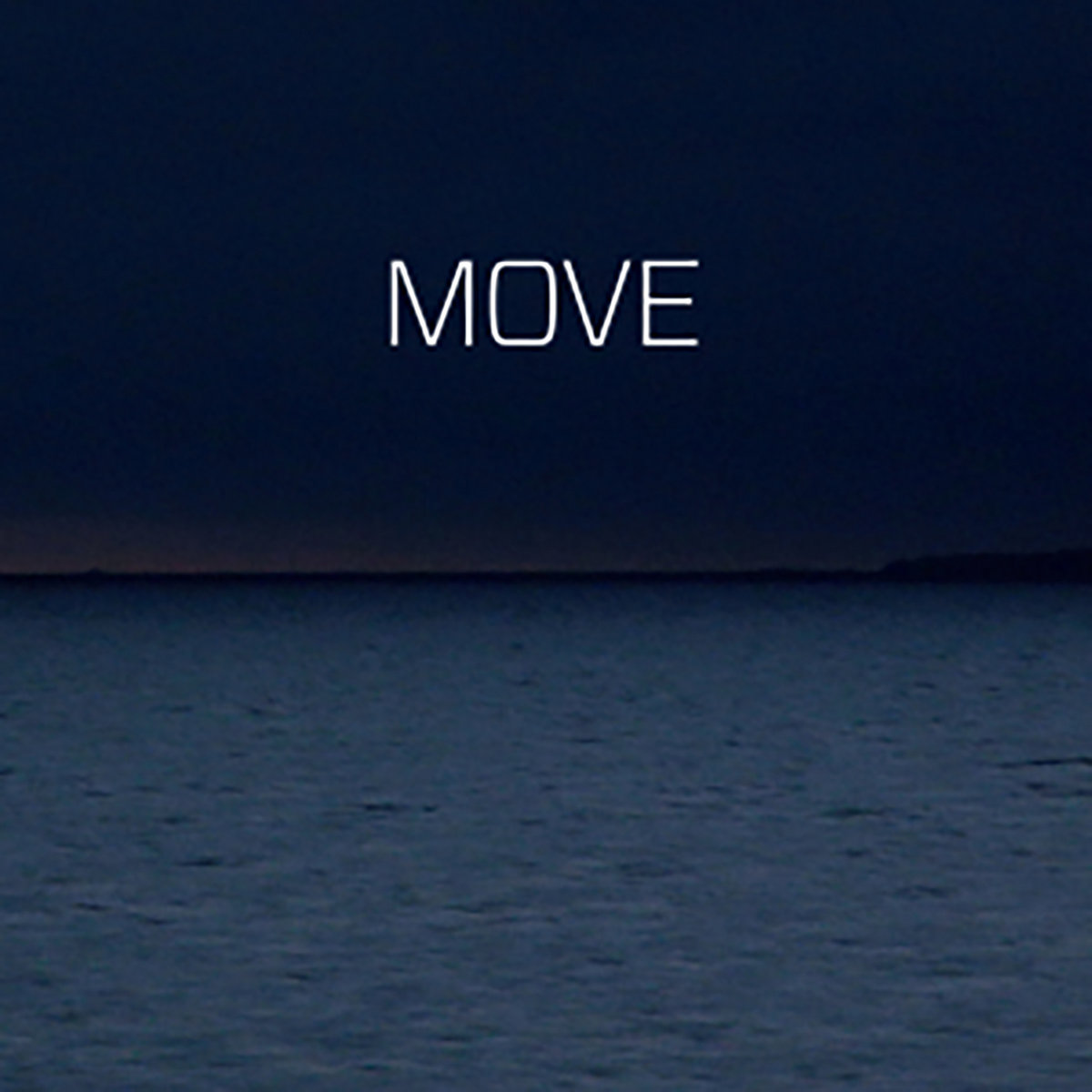
Move is a working quintet helmed by Finnish saxophonist Harri Sjöström. I wanted to get at least one disc with a medium-sized group on it, as well as at least one long improvisation. Hyvinkää, named for the city it was performed in, fit both bills.
The 39-minute piece launches abruptly into a hovering phase, patient discovery befitting the nighttime colors on the album cover. Bells abound — the cool-spectrum chime of vibraphone (Emilio Gordoa), or small sparse pings (Dag Magnus Narvesen at the drum kit). Sjöström’s soprano sax darts against the unfolding backdrop and eventually feeds energy back into it.
The band is rounded out by Achim Kaufman (piano) and Adam Pultz Melbye (bass), both essential to fleshing out the sound and helping drive the action during the more heated phases. The band’s central mood-maker, though, is Gordoa’s vibraphone and its touch of nighttime charm. His unaccompanied solo is a nice treat.
Back home, I learned that Move had released a second CD. Naturally, I had to buy it in physical form to complete the matching set. Move in Moers feels more like a direct conversation; it dives into the chatter, rather than scene-setting. The atmosphere stays restrained, as on Hyvinkää, building up to a boil more than midway through. The conclusion is a satisfying slow surge, a moment of serendipity where the players agree: It’s time.
I’ve been associated with KZSU long enough that a few of my colleagues have passed on. Bruce, who helmed the country/bluegrass library and was a huge help to me in navigating station operations. Sunshine, whose did an uplifting show right in the middle of the week, lunchtime on Wednesdays.
We at KZSU learned of Justin Davisson’s death in November, roughly one month after the fact, through a Facebook post by his sister. The news reverberated quickly around the station email list, drawing comments from people who’d been silent for years, including me.
Known as Ragnar of Ravensfjord on the air, Justin was a dedicated metal DJ but also a musical omnivore — and, crucially, a prog fan. He was my partner in crime for The Horror on Prog Mountain, a very occasional series of late-evening specials dedicated to progressive rock, particularly those bands from that ’70s era. Together with Justin’s friend Gary, from the band Noothgrush, we riffed on Rick Wakeman’s cape, Greg Lake’s ego, and the Genesis/Rush descent into market-friendly pop. But we also made it clear that we loved this music and wanted to celebrate it. Every show had to feature a side-long track; that was the rule. Gary dug into contemporary prog from around the world, evidence that the vibe lived on. Like the music, our mic breaks were long and indulgent. It was so much fun.
Justin was a talker, especially when it came to music, and he would stream-of-consciousness his way through multiple topics until you stopped him. But he was also extremely well-liked, a friend to everyone he encountered, and his metal show, Bloodstains Over Atherton, was well respected. Outside the studio, I would encounter him at music events here and there, but I’m realizing I never went to a show with him. I’m regretting that now.
A glance at Ragnar’s playlists on Zookeeper (KZSU’s database for music and playlists) gives you an immediate sense of what he played. You don’t even have to know the music; just look at those band names and album titles! He was the classic dichotomy of a sunny, gentle personality who found outlet and community in heavy music. Many thanks to Smurph for doing a memorial show on KZSU, spinning tracks lifted from those playlists. We miss you, Justin.
Proudly, I can say that I didn’t know it was Mars Williams up on stage, and he did indeed blow me away. To me, the Psychedelic Furs were the band my younger sister liked for their dreamy, glossy songs. I went in with modest expectations and walked away thinking, wow, those guys rock more than I expected, and whoever plays sax for them is a monster.
That was a couple of years ago. A friend had an extra ticket to the Cruel World festival in Los Angeles — a day full of ’80s nostalgia acts and some related modern-day artists like Blaqk Audio. Not a jazz scene, obviously. The main attraction for me was Devo. (I will forever savor and envy The New York Times’ October 2023 headline: Devo’s Future Came True.) The surprise highlight, and the thing that still sticks in my mind most strongly, was Mars.
Mars died of cancer earlier in November, as I learned through Peter Margasak’s Nowhere Street newsletter. On Mars’ GoFundMe page, Mars’ family notes that when treatments proved ineffective, he opted to “spend six weeks of the time he had left living as he had since he was a teenager — out on the road performing night after night.” Good for you, Mars.
I knew Mars’ name and work — but apparently not his face — from the Chicago avant-garde scene, the same vector that brought me to Ken Vandermark, Tim Daisy, Nicole Mitchell, Dave Rempis, and so many others. It’s tragic that he won’t be here for one last round of the Ayler Xmas shows.
Elsewhere: Martin Schray provided thoughtful words for the Free Jazz Collective, including a blitz of Mars Williams recommendations. Hannah Butler wrote a touching obituary for the Chicago Tribune.
Rent Romus and Heikki Koskinen — Itkuja Suite, Invocations on Lament (Edgetone, 2023)
(Rent Romus’ Life’s Blood Ensemble will perform Itkuja Suite on May 27 (8:00 p.m.) and May 28 (4:00 p.m.) at Berkeley Finnish Hall, 1970 Chestnut St., Berkeley.)
Manala, released in 2020, was the second in a trilogy of jazz-centric albums exploring saxophonist Rent Romus’ Finnish heritage. That album retold legends of the underworld and the afterlife. Itkuja Suite, completing the trilogy, brings us back to the struggles of the living world through the jazz-minded Life’s Blood Ensemble and some boldly emotive singing by Heikki Laitinen.
Itkuja is a traditional Finnish music of lamentation, but its singers are hired for weddings as well as for funerals. It’s a dichotomy that I think we all have a sense for. There are glimmers of thankful happiness in times of mourning, and there is a heaviness and longing that accompanies moments of joy.
In that light, Itkuja Suite deftly traverses emotional borders, at once railing against the cruel world while inviting us to dance to big band-inspired jazz. But this isn’t about contrasting two extremes; to me, it’s more an exploration around a multi-dimensional field of conflicting, intertwining senses. Laitinen sings in Finnish and Karelian, in personalities ranging from weepy to a menacing growl. Traditional songs provide much of the lyrical source material, although there is also a song mourning the Soviet Union overrunning the Karelian region (a WWII-era development that parallels Russia’s invasion of Ukraine) and an original itkuja written by Romus, inspired by his own quest to recover his heritage.
The inspiration and some of the words date back centuries, but this is also a jazz project at heart, with most pieces written or arranged by Romus or Koskinen. The band delivering it is Romus’ Bay Area-based Life’s Blood Ensemble, 11 musicians counting Laitinen, Romus, and Koskinen, and they get ample room for soloing: sax, trumpet, flute, vibes and cello all take lead positions.
The songs best exemplifying the itkuja spirit might be those that open with majestic drama and then step into a more energetic, jazzy space. An example is “Runkoterian halla (Rungoteus),” which is based on a fable about a rye farmer and his spirit of perseverance. It’s a little more than a minute before the jazzy segment kicks in, with solos by Koskinen on e-trumpet and Romus on alto sax:






 Memory Select: Journeys in Creative Music